
First of two responses from Chris Leetch.
I have been a Pastor in Portadown for over 20 years. For most of that time I have also been involved in poverty response work. My role in running a food bank has allowed me to connect with people and groups across Portadown and the surrounding area. I have friends and colleagues in a wide range of communities and since I see the same love and care for others which radiates from people regardless of their background, that gives me significant hope!
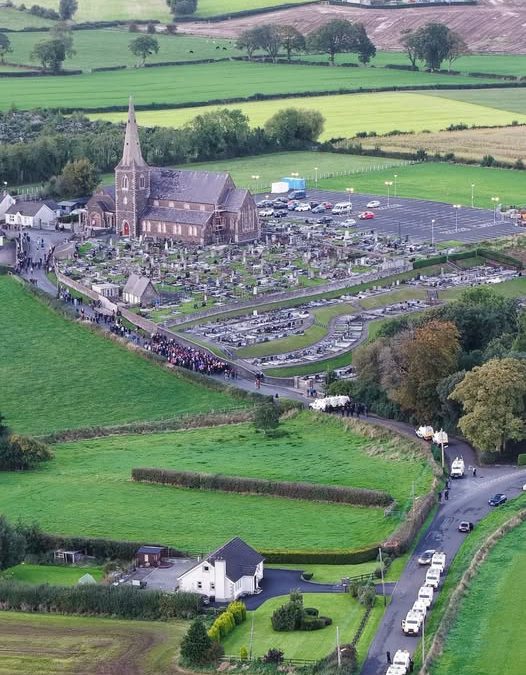
During the recent stand-off I walked the streets of Portadown. I stood (on the footpath) chatting with protesters on the Garvaghy Road. I attended services of prayer for peace in Drumcree Parish church, met with a wide range of local clergy and stood with the Orangemen at their prayer vigil. I have taken the time to listen and to see things from many perspectives. The Garvaghy Road stand-off felt like being pulled back into the past, with communities being corralled into positions of binary opposition, orange and green and nothing in-between. For some, a collective trauma memory had been activated, bringing them mentally back to a place of deep pain. It is no surprise that tensions escalated quickly when such strong emotions were at play. These emotions, on both sides, need to be recognised in a way which acknowledges that the much-needed work of individual and community healing remains undone.
Maybe after such a long passage of time, there is an opportunity for deep wounds to be healed as we look towards the future. We cannot just put Drumcree back into the box for another 30 years. Drumcree is the buried time capsule that no-one wanted to dig up, but perhaps it is time to open it and carefully examine the contents? The alternative is to quickly bury the past again and seek to move back to the way things have been since the late 1990’s, effectively living parallel lives of tacit complacency. Our children deserve better than that.
It is easier to return to what we know. The predictability of everyday life offers a certain security and comfort. I feel that pull myself. An alternative way forward would be difficult, as it lies along a path of painful uncertainty, prolonged dialogue, and mutual understanding. Brave conversations need to take place, but these need to happen with core involvement from the young people that my generation has failed. (I turned fifty last year). Many of us have enjoyed the dividends of a peace agreement, but, along with many political, civic, and church leaders, neglected the ‘long peace’ process, settling for a quiet and economically prosperous life.
A moment of opportunity exists and yet it has come in the wider context of polycrisis and significant societal change. The creative energy required to dream of a better, more peace-filled future lies with our younger people, who must be supported to find solutions to sectarianism and fear of the ‘other.’ These young people already know how to transcend the barriers of orange and green. They are socially, politically, and ethnically diverse. But they also face so much uncertainty; issues of poverty, unemployment, civil unrest, and climate crisis loom over their futures.
This is where I find the grand historical sweep of the Hebrew scriptures so inspiring, as God works his will through multiple generations. The wisdom literature calls us to leave an inheritance to our ‘children’s children’ (Proverbs 13:22).
Collaborative, multi-generational thinking is required, where we seriously consider what it means to leave a legacy to the next generation, a legacy which does not include the toxic replication of our troubles-trauma past.
In a further blog, I will seek to outline some practical steps to help make this happen.
Chris Leech is married to Debbie and they have 3 children. He is Community Transformation Lead at Emmanuel Church in Portadown, where he has been active in the community for over 20 years, bringing Kingdom transformation to the community. Chris is an anti-poverty campaigner, overseeing various community response initiatives and working at a policy level both locally and nationally to bring measurable change to people facing challenging circumstances.
He is currently carrying out research with the University of Ulster, examining the causes and effects of poverty in Northern Ireland. This work is focused on empowering those with lived experience to share their stories so that their voice can shape poverty research and policy.
Please note that the statements and views expressed in this article are those of the author and do not necessarily represent those of Contemporary Christianity.
Recent Comments