
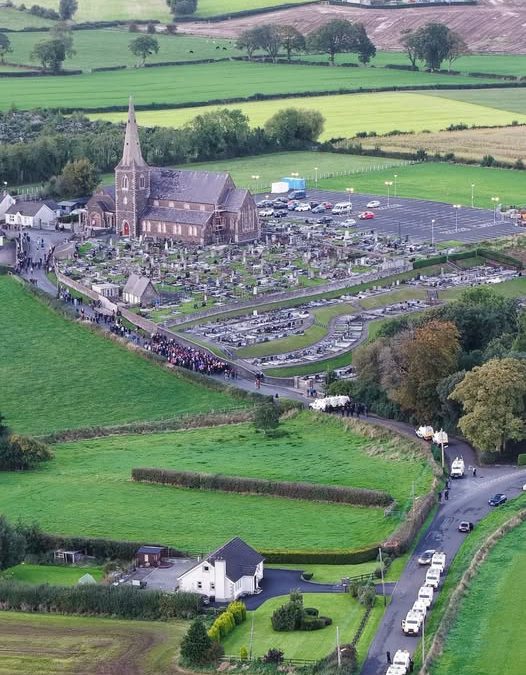
Whatever you make of the recent crisis in Portadown over the proposed Orange Order parade from Drumcree church and the opposition to it by the residents of the Garvaghy Rd, there is little doubt that it has changed the shape and tone of our politics, divided our society, and done immense harm to the building of a reconciled community in Northern Ireland.
It is also true that there has been little public Christian reflection on the likely impact of the dispute over the medium to longer term. That is something of a surprise but may be partly due to the complexity and the range of issues that have been opened up. They go much farther and deeper than simply discussing the decisions and the actions of those most integrally involved such as the Parades Commission, the PSNI or even the judiciary.
Contemporary Christianity does believe, however, that it is especially important to bring some Biblical thinking and Christian reflection to those issues, and to help reshape our very uncertain future. The already limited cohesion of our community has been put under serious stress, and the pressures will be with us for some time to come – not least because local and Stormont elections are scheduled to be held in May 2027. The outcome is unlikely to deliver harmonious relationships.
It is our conviction that Christian people need to think both personally and publicly – and carefully – about some of the key issues, a few of which can be readily identified.
The deepening chaos of governance in Stormont, not least the failure to agree a budget for the current fiscal year which began back in April.
The Drumcree dispute raises important questions about the relationship between the rule of law, non-violent protest, civil disobedience, and the rights of others. How should Christians navigate situations where rights and responsibilities appear to conflict? And how might Christian understandings of justice, human dignity and the common good inform our approach to these questions? Is there actually any such thing as a ‘rights-based society’ from a Biblical perspective?
The failure of – yet the need for – politics / parties to attempt to work together for the common good. This raises the question of what God has ordained the fundamental purpose of government to be.
The need for and shape of new thinking on reconciliation and good community relations. Are these central to the Gospel or distractions from it?
The building of community cohesion in an increasingly fractured society. In Christian teaching, what is the balance between individual choice and responsibility alongside partnership with and compassion for others – including opponents?
The need for, and the challenge of, strengthening policing both nationally and at local community level. How important is it for Christians to be at the forefront of promoting law and order rather than just leaving it to the agencies of the state to get on with doing the best they can.?
The shape of the contribution of ‘the church’ both as institutions and as local fellowships to helping rebuild a healthy society. What shape might a Christian / Biblical agenda look like for the forthcoming elections both to Stormont and local councils?
There are no easy answers to these and other issues thrown up by the Drumcree dispute and its aftermath. Yet none of them is new either here in Northern Ireland or in many societies across the world. There is much wisdom and practice to draw on, including from our own recent past, but it is all too easily ignored or forgotten. So, to stimulate our thinking, praying and action from an explicit Biblical and Christian perspective, we are inviting a few blogs over the coming weeks from some faith leaders on these and associated issues on the back of this personal starter blog from me. We invite you to read them carefully, and then to respond thoughtfully to them.
The call of Scripture is ever pertinent: As Proverbs 3 puts it: Blessed are those who find wisdom, those who gain understanding.
That is what we all need and must seek.
Very Rev Dr Norman Hamilton is a retired Presbyterian minister, former Moderator of the General Assembly, and Chair of Contemporary Christianity.
Please note that the statements and views expressed in this article are those of the author and do not necessarily represent those of Contemporary Christianity.
Recent Comments