
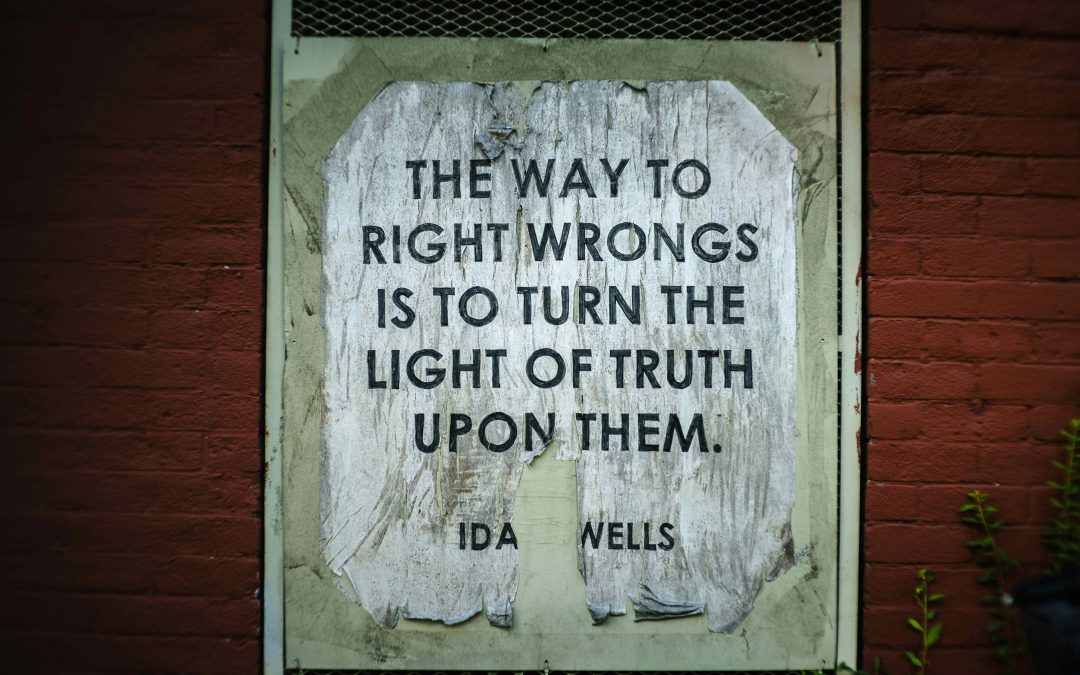
Public scandals are rarely out of the news in recent times. Recently they have included the Post Office scandal, the infected blood scandal, and the sordid Epstein / Mandelson affair. There have also been well publicised scandals in political life, business, banking, journalism, broadcasting, and the church.
I find it deeply unsettling that there is almost no public discussion or debate about the morality that has led to so much wrongdoing. Inevitably, sin is never mentioned. The emphasis has almost entirely been on the failures of politics, rules, regulations, accountability, and oversight.
Nonetheless, the difficulties in promoting Christian and Biblical moral standards for a wider society are immense. A core obstacle is that any agreed standards of public morality, by definition, come through consensus. In contrast, personal standards focus mainly on personal choices. Yet NOT to promote Biblical standards of public morality is to acquiesce with the view that our faith is for private consumption only and has little or nothing to say to a wider world.
I would suggest that the core Bible teaching is clear enough. Abraham is told to promote what is ‘right and just’ in the context of God seeing what was happening in Sodom. (Genesis 18). The ten commandments (Exodus 20) set a framework for a healthy society where idolatry of all kinds, greed and the demeaning of other people is clearly unacceptable. The prophets consistently called for justice and righteousness alongside the protection of the vulnerable. Jesus’ famous ‘Sermon on the Mount’ sets out many basic principles of what is and is not acceptable to God.
Perhaps the clearest call in the Bible is the well-known verse from Proverbs 14: Righteousness exalts a nation, but sin condemns any people.
Yet it is far from easy to figure out exactly what is ‘right and just’ in the complexities of modern society. Who should make the final decisions? The government? Parliament? The courts and judges? Popular opinion? The church? If something is legal, does that make it morally right? (For example: the use of loopholes to avoid paying tax.) Or can something be morally right but yet clearly illegal? (For example: whistleblowing – which is the leaking of classified or confidential information to expose corruption, and which often violates secrecy laws).
I am fully convinced that the Seven Nolan principles of public life need to be re-awakened and widely promoted. They were developed in 1995 following the “cash-for-questions” affair in Parliament. Even today, every elected representative, and virtually every senior public servant is required to assent to these seven principles of public life. They are selflessness; integrity; objectivity; accountability; openness; honesty and leadership. These are entirely consistent with Christian values but seem to be set aside in practice all too often and all too easily. There is a convincing case that they should be seen as best practice, not just in government, but in every corner of our society. There is important work to be done to interpret them in the light of Biblical teaching.
The prevailing modern emphasis on rights, without an equal emphasis on responsibilities, means that there is little incentive – or even expectation – to consider the impact on others of the choices or demands that citizens make on either the state or other people. Public morality prioritises the well-being of others, rather than the individual.
Also, the growth in tribunals, ombudsmen, regulatory bodies, and the like alongside the court system can effectively ‘out-source’ moral choices rather than expect straightforward acceptance of the need to do what is ‘right and just.’
Given that no-one is righteous – no, not one – and that all have sinned and fallen short of the glory of God (Romans 3), it is inevitable that there will be scandals in our society. That does not excuse them, but it does suggest that Christians should initiate the difficult and complex discussions about the moral standards we can and should expect in our modern world. Are we up for that?
Very Rev Dr Norman Hamilton is a retired Presbyterian minister, former Moderator of the General Assembly, and Chair of Contemporary Christianity.
Please note that the statements and views expressed in this article are those of the author and do not necessarily represent those of Contemporary Christianity.
You’re right, Norman, but I struggle to know where on earth – and I mean ‘on earth’ – we start.
Thanks Jennifer. A very reasonable question! One relatively straightforward starting point might be to simply ask people what their core values are and where did they get them from.
I agree – it is difficult to know how, as an individual, to initiate debate in the public square