
One of the clearest messages running through the recent report, Rethinking Community Relations: Faith, Belonging and Reconciliation in Contemporary Northern Ireland (Contemporary Christianity, 2026), was the need for a more credible faith voice in public life. Not a louder voice for the sake of it, and not a nostalgic return to the language of an earlier era, but a voice that is morally serious, grounded in lived practice, and able to speak honestly into the realities of the present.
That is why I was so struck by a recent sermon, preached on 11 April 2026, by Abbot Mark of Holy Cross Abbey, Rostrevor.
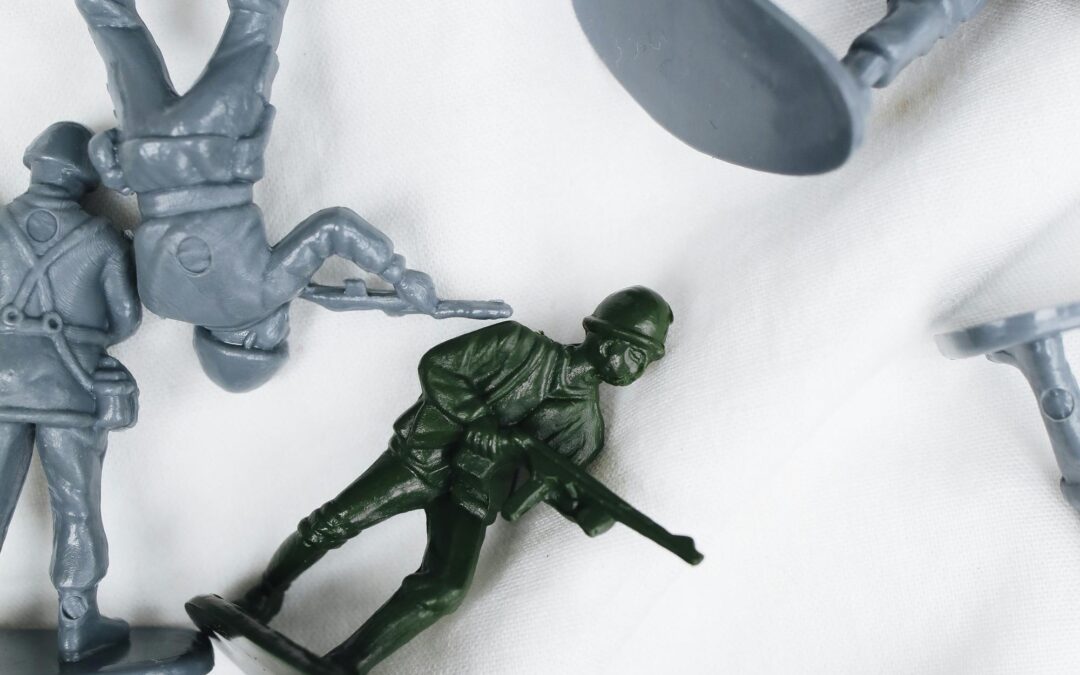
What stayed with me was not simply that he condemned violence in the Middle East, though he did. It was the theological clarity of it. He refused the idea that war can ever be dressed up in Christian language or granted spiritual legitimacy. Drawing on the language of Pope Leo XIV, he said plainly: “war is never holy.” He repeated the Pope’s stark insistence: “Only peace is holy, because peace is what is willed by God.”
That is such a simple sentence, but it carries a deep challenge. Peace is not an optional extra to Christian faith, nor a vague aspiration to be invoked when convenient. Peace belongs to the very will of God. War does not.
This matters because public Christian speech can become hesitant when violence is politically charged. It reaches for balance before truth. It mourns suffering but stops short of naming the moral scandal of war itself. At worst, Christianity is used to justify violence, sacrifice, and domination. In that context, Abbot Mark’s sermon offered something different: not evasion, but moral and theological seriousness.
He made clear that “Adherence to the Great Commission and obedience to the Great Commandment form a pair.” In other words, there is no faithful proclamation of Christ without love of God AND love of neighbour. The Church cannot claim to bear witness to Christ while making peace with dehumanisation, excusing mass suffering, or remaining morally numb before the killing of civilians.
Abbot Mark also challenged the wider political and moral climate in which war is too easily justified. Reflecting on the Pope’s appeal for peace, he pointed to world leaders who choose domination over dialogue and who speak as though overwhelming violence were somehow necessary, rational, or even righteous. Against that, he called for “radical forgiveness and dialogue” and for “active peace-making.” He insisted that genuine diplomacy demands that people “really listen to each other and strive to understand each other.”
There was also a sharp warning in the sermon about ideology and power. Abbot Mark said that “People need to think beyond ideologies which can blind them.” That is a needed challenge. Ideology does not just distort how we think; it can help those with power justify what should never be justified. It can make domination sound necessary, and mass suffering sound regrettable but acceptable. It can make us more loyal to political narratives, strategic interests, or national projects than to the equal worth of human life. As Abbot Mark puts it, “All too often hundreds and thousands of people are written off, their loss justified as collateral damage which, while regrettable, was inevitable.” That is precisely the moral danger. Once people are written off in this way, violence is no longer being faced truthfully. It is being managed, explained, and sanitised by those with the power to name it on their own terms.
Christian faith should never allow that. The Church cannot claim to bear witness to Christ while accepting the logic that some lives can be sacrificed for the sake of order, security, or political ends. Nor can it remain silent when war is given sacred cover.
For me, this is what a credible faith voice looks and sounds like. Not one that wraps violence in careful language. Not one that treats war as tragic but inevitable. Not one that blesses power and calls it order. But one that says clearly that war is not holy, that peace is the will of God, and that Christian witness must be judged by whether it bears the likeness of Christ.
In a time of brutal conflict and moral evasiveness, that kind of clarity is not naïve. It is necessary. And it is exactly the kind of faith voice our public life needs.
Dr Cathy Bollaert is an independent consultant who has worked towards the goal of reconciliation in numerous post-conflict societies including South Africa, Sri Lanka and here in the North, Northern Ireland.
Please note that the statements and views expressed in this article are those of the author and do not necessarily represent those of Contemporary Christianity.
Recent Comments