
I grew up in Buenos Aires, in a non-religious home, my mother was very much against church, and my father was a gentle agnostic. We lived in a neighbourhood where there was a large number of Jewish families. In primary school the majority in the class were Jewish. I had a bit of fascination with their culture; I liked watching my neighbours across the road lightning a candle on Friday evenings indicating the beginning of the Sabbath. I used to think along these lines: these people really know who they are. They are my neighbours, but they live by a different calendar, they have their rituals, they seem richer than me. I felt I was missing out on something.
Though my parents were not religious Jesus for me was somebody special and eventually at the age of 18 I accepted His invitation to follow Him. I started attending a church with particularly good teaching, but the liturgical year was not practiced. I did not even know that there was a Christian calendar!
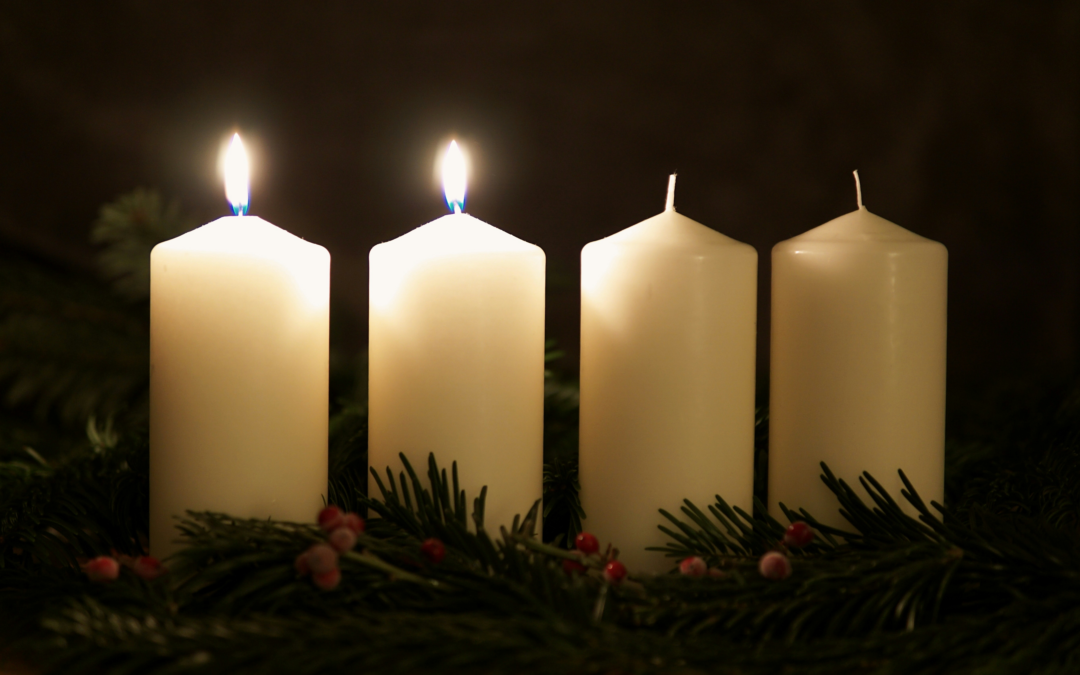
Time went by and I found myself moving to Ireland where through my German friend I learnt to appreciate the season of Advent. Each Advent we would chat about what we will be reading or meditating on, so it became for me an important season.
The more that I reflected on Advent, the more that its message became personally both countercultural and revolutionary in a positive way.
For most people, their year starts in January. Often they may “resolve” to set new goals for the coming year. It starts with “doing”… with making plans for some personal changes, like changing their diet or exercise programme! Businesses talk about financial projections, fund raising, and churches about their programmes, etc.
However, Advent starts with “waiting” because this calendar does not start with “us” being in charge but with God. He is the one who initiates the beginning of the year, which starts at the end of November. He is the one who, in His generosity sees my condition and the condition of the world and decides to do something about it.
In waiting I realise that I cannot live to my full human potential by my own efforts, so I wait… I wait for God to reveal himself in the most unusual way.
And God’s initiative was not done with a big proclamation in the centre of one of the most powerful empires of the time but in an obscure town in a remote roman colony which was not that important.
A teenager girl dares to say “yes” to God’s “strange” plan and to pray and sing a song that challenges even the power of Caesar Augustus:
“He has performed mighty deeds with his arm;
He has scattered those who are proud in their inmost thoughts.”
Luke 1:51
Mary was already living in the reality of another kingdom, not the one ruled by emperors but the one that God invites people to live in and enjoy.
This is always the way God works, choosing the simple, the ones who to society seem insignificant but who are open to collaborate with Him in His wonderful plan of salvation.
Waiting, from the world’s point of view, is considered a waste of time. The “empires” of our time tell us that we must be in charge… that we must run here or there so we do not miss on something. And as these empires continue to shape us, we forget how to live out the fullness of our humanity.
Maybe the question for us to ask this Advent is not: “What am I going to do this coming year?” But… “Who do I want to become by God’s grace this coming year?”
The late spiritual leader Dallas Willard used to say: “What God gets out of your life is the person you become.”
For followers of Jesus, this season of waiting is a season to reflect on what has gone before, to thank God for how He has been with us in joy and pain, and to let Him… “be born again once more in us” so He can continue to shape us into His likeness. Then we can be people who quietly but powerfully transform the places where we live, work and play.
Ana Mullan is from Argentina and has been living in Ireland for the last 41 years. She is a spiritual director, retreat facilitator, and artist. She is board member of Renovaré UK and Ireland. She lives in Dublin, is married to Seán and has three adult children and four grandchildren.
Please note that the statements and views expressed in this article of those of the author and do not necessarily represent those of Contemporary Christianity.
Thank you Ana for this timely and refreshing reminder of God’s upside-down kingdom.
Beautifully written and so true.
Thank you