
The release of the Epstein files by the justice department in the United States continues to dominate so much of the daily diet of news and current affairs. The investigations and ramifications of the scandals will last for years, and we are all dragged down with them as trust in many of our leaders is ever more eroded.
Hardly a day goes past without me recalling a phone call with a fairly senior public official. I made a reference to the ‘great and the good’ as the conversation progressed, and when I said those words, I was interrupted. My friend said. “I work with these people day in day out. Some are great; some are good; very few are both – and just you remember that.”
I did, and have remembered ever since, for it has changed my perception of those who wield power and influence. It is of course important to say that there are many fine political and civic leaders, but my friend’s comment has made me wary of starting with the assumption that all leaders are fine or good. I used to assume the best, but increasingly, I have come to understand that they, like me, have been sinful from birth (Psalm 51), and… that there is nobody who is naturally ‘good – no not one (to quote Romans 3 and Psalm 14).
Such truths, set out so clearly in the Bible, are widely ignored or minimised. As Rabbi Jonathan Sachs put it in his seminal book “Morality’ (published in 2020) …” we live in a society where there is regret but no remorse, guilt but no shame”.
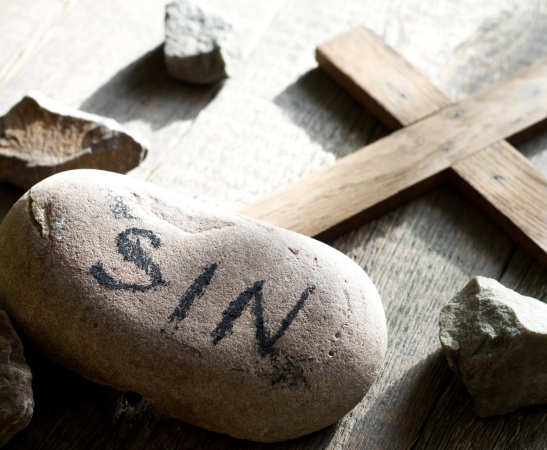
I find it striking that in all the commentary about the Epstein scandals I have yet to hear any mention of sin. Evil yes: Sin no. Deception: Deceit and cover up yes. Lies and denials yes: Sin no.
I really cannot expect the media to talk about public sin, but the biblical truths about the sinfulness of the human condition have almost disappeared from the thinking and the language of ordinary Christians like you and me. In his mammoth volume on Biblical Critical Theory published in 2022, Chris Watkin suggests on a number of occasions that… society itself would be the better if we talked about and introduced the concept and reality of sin into our public discourse. His reasoning is straight forward. To speak of sin is simply to tell the truth and not allow evil and wrongdoing to be airbrushed away or reduced to a failure of politics or accountability.
Yet to do so is fraught with difficulty. Mention sin, and almost inevitably, a hard-line association with hell and damnation is close by. We have progressed beyond such dark ages thinking, and to propagate such an idea is to try to impose outdated religion on our liberal and progressive society. Yet that idea itself is open to serious questioning, for confidence in our leaders in almost every sphere of life is diminishing. Scandals abound – in business, in politics; in journalism; in celebrity culture; in the church, to name but a few.
Yet to NOT call out sin for what it is, diminishes Biblical truth and undermines the call of and the need for the gospel of Jesus Christ. After all, he came to deal with the consequences of sin, dying and rising from the dead to defeat sin. That is what we are celebrating over this Lenten season and as we anticipate Easter!
Sin is always with us. Therefore, we should not be surprised that scandals have been and always will be with us. So, surely, there is no need to back off describing them for what they are and spelling out God’s remedy. It is, after all, truth that sets us free!
Very Rev Dr Norman Hamilton is a retired Presbyterian minister, former Moderator of the General Assembly, and Chair of Contemporary Christianity.
Please note that the statements and views expressed in this article of those of the author and do not necessarily represent those of Contemporary Christianity.
Thank you for this article, I have been reading Luke 12: 2-3 & at this moment in time these verses describe exactly what is happening in our world! God is revealing exactly what this article is saying too. Sin abounds! – Oh Lord may we as Your people keep short accounts with You, & live closer to You, pray & persevere in bringing & sharing with those who don’t know You how they can be saved. Thank You for Your Word, Your love & salvation.
It certainly is true that we are all sinners by nature, but we need to emphasise that we have to ‘walk in the light as He (Jesus) is in the light’ when we make our faith commitment to Him as our redeemer. Sadly too many professing Christians are happy to admit that they are still committing sin regularly, and sleep in peace that all these sins are covered by Jesus’ sacrifice. Certainly they are when we confess them, which we are gloriously enabled to do because of the indwelling Spirit of God. Thank God for the gift of the Holy Spirit, who sensitises our thinking so that when temptation to sin is offered to us we are enabled to resist, or if we do not immediately resist, gives us the grace to confess to Him who has redeemed us, and claim HIs forgiveness. Let all who profess Christ as Lord demonstrate in our lives our likeness to Jesus, and thereby witness to his saving power.